Lichfield Statues: Specialist Heritage Cleaning at Beacon Park
Project Type: Specialist Heritage Stone & Bronze Cleaning
Client: Lichfield, Staffordshire
Scope: Conservation cleaning of three heritage monuments
Location: Beacon Park & Museum Gardens, Lichfield
Timescale: Managed within public access and weather windows
Overview of the Lichfield Project
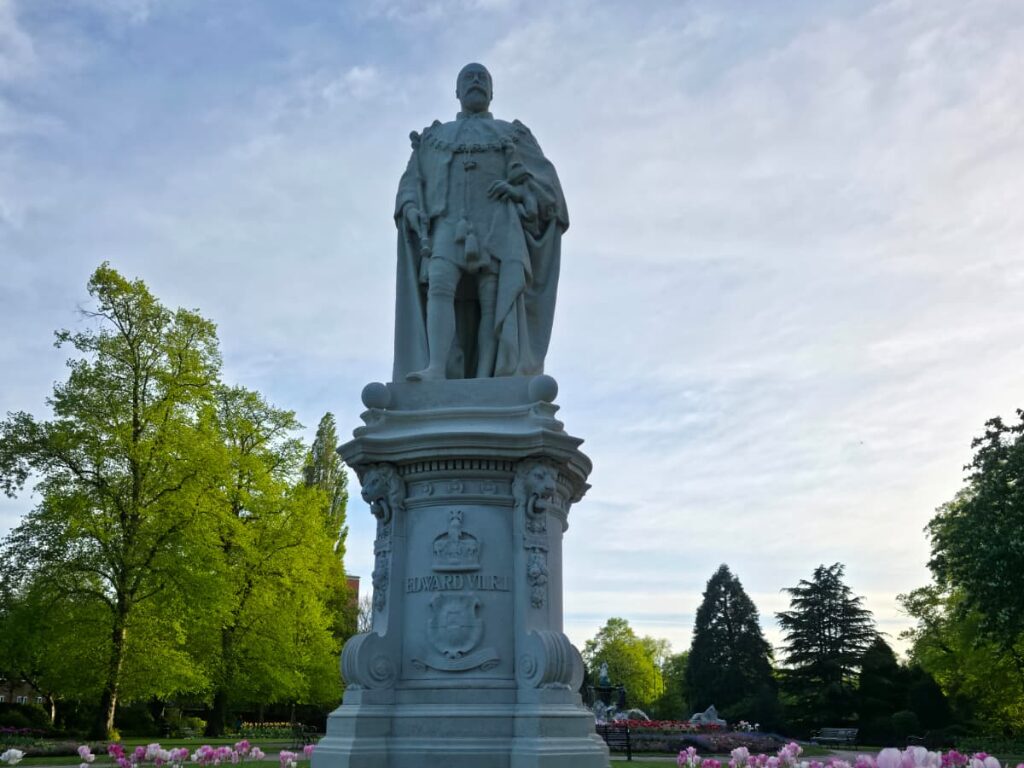
Exterius was appointed to deliver specialist heritage cleaning on three of Lichfield’s most significant public monuments: the Captain Edward John Smith statue, the King Edward VII statue, and the Martyrs’ Wall (Martyrs’ Plaque), all located within Beacon Park.
Beacon Park is one of Lichfield’s most-visited public spaces, celebrated for its formal Museum Gardens, mature planting and water features. The monuments themselves carry over a century of national, royal and civic significance, making this a project where precision, sensitivity and environmental responsibility were non-negotiable.
This was not a “wash and rinse” job. Each monument is made from a different material, sits in a high-traffic visitor area, and has no margin for error. Two of the three were last conserved as part of the Heritage Lottery–funded Lichfield Historic Parks Project in 2010, placing Exterius in a continuing line of conservators caring for these pieces.
The Monuments
Captain Edward John Smith Statue. A 7’8″ bronze figure on a Cornish granite plinth, commemorating the Captain of the RMS Titanic, lost on 15 April 1912. Sculpted by Lady Kathleen Scott – widow of Antarctic explorer Robert Falcon Scott – and unveiled in 1914 by Smith’s daughter Helen.
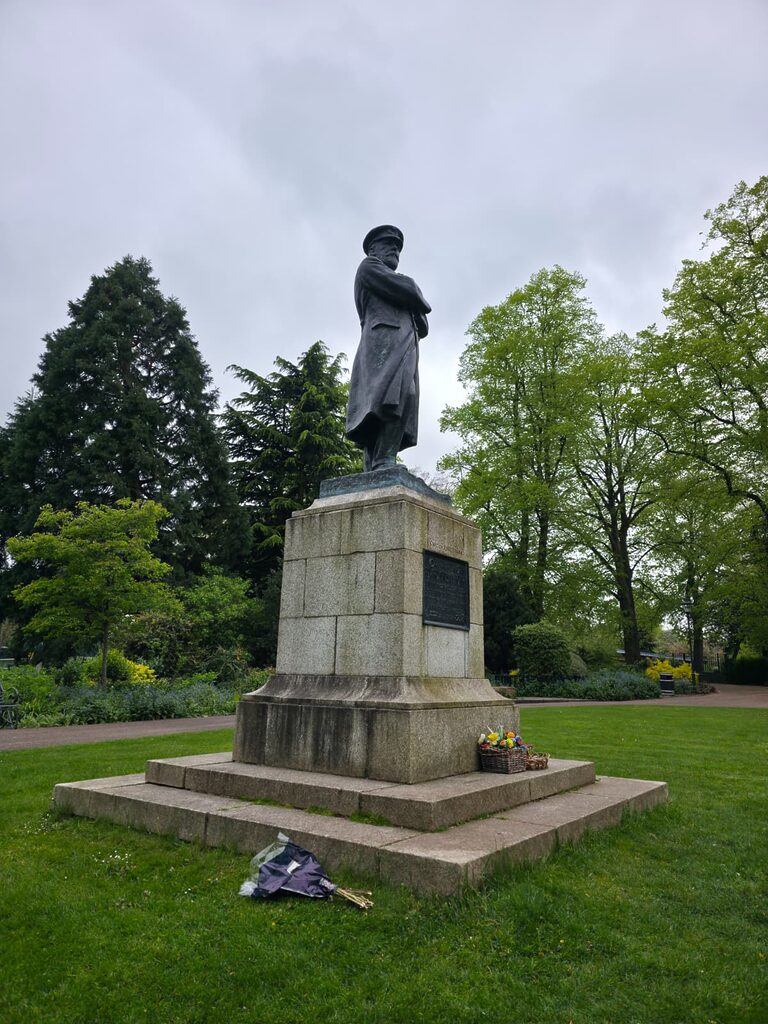
The plinth carries Smith’s reported last words: “Be British.” A nationally significant Titanic memorial and one of the most photographed monuments in Staffordshire.
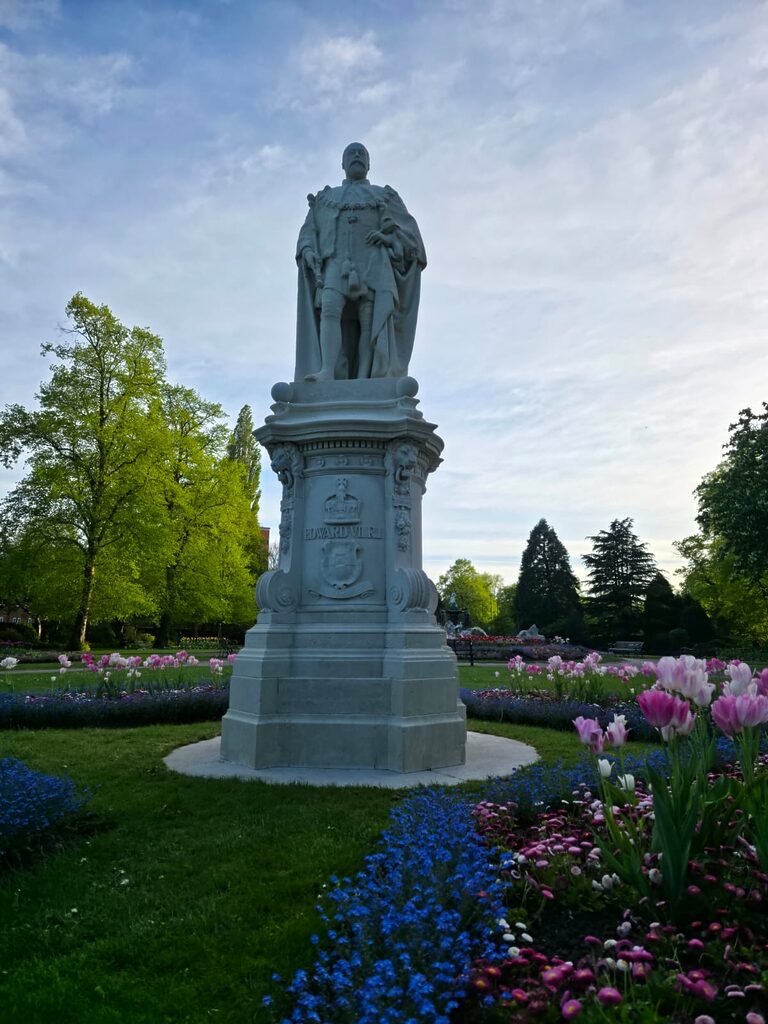
King Edward VII Statue. The oldest of the three, unveiled on 30 September 1908. Carved from Portland stone by the local Lichfield firm Robert Bridgeman & Sons and gifted to the city by Robert Bridgeman himself during his year as Sheriff of Lichfield. It depicts Edward in full coronation robes, holding the sceptre. Previously conserved in 2010 under the Lichfield Historic Parks Project, and rededicated in 2013 by HRH The Princess Royal – Edward VII’s great-great-granddaughter.
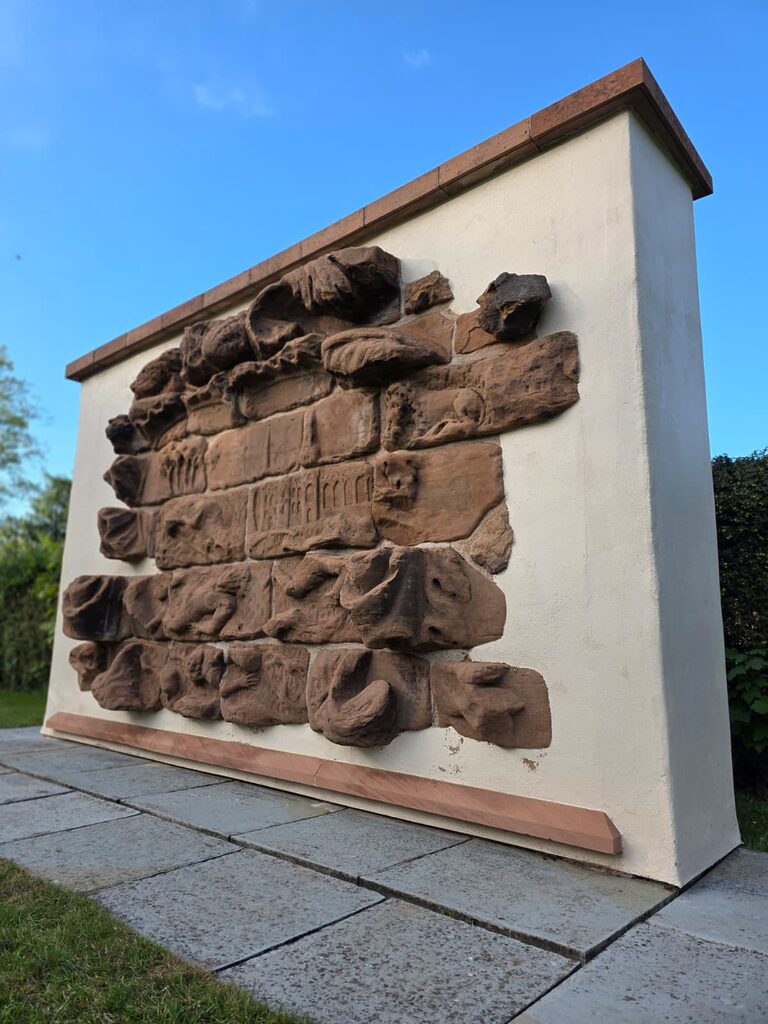
The Martyrs’ Plaque. An 18th-century stone panel originally set into the façade of Lichfield’s Guildhall on Bore Street, now displayed in Beacon Park. It carries Lichfield’s historic city seal – in use since 1548 – depicting the legend of around AD 288 in which a thousand Christians, led by three Christian kings, were said to have been martyred near Lichfield under the Emperor Diocletian. After the Victorian rebuild of the Guildhall, the plaque was lost to a rockery in Museum Gardens for over a century before being rescued, conserved and mounted on a secure stone plinth in 2010. The seal it depicts remains at the heart of the city’s civic identity to this day.
The Scope of Work
The cleaning programme covered:
- Removal of algae, lichens and biological growth across all three monuments
- Removal of deep-rooted moss from porous stone surfaces
- Removal of atmospheric pollutants embedded within the substrate
- Sterilisation of stone surfaces to slow biological regrowth
- Careful protection of surrounding ornamental planting and public flow
Key Challenges
1. Multiple Delicate Substrates
The three monuments combined four distinct materials: bronze, Portland stone, Cornish granite, and the sandstone of the 18th-century plaque. Each reacts differently to heat, pressure and moisture.
For soft, porous stone there is no second chance — incorrect settings will etch, scar or strip the surface permanently. To manage this, Exterius deployed a variable heat and pressure steam cleaning system, with settings tuned per substrate, combined with hand detailing to lift deep-rooted moss without disturbing the stone beneath.
2. Slow, Methodical Cleaning of Porous Stone
Porous stone absorbs contaminants beneath the surface. A fast “wash over” only addresses what’s visible, leaves uneven streaks, and crucially fails to draw pollutants out of the substrate – meaning the monument re-soils faster and degrades sooner.
Our approach was the opposite: slow, low-impact, methodical work that draws contamination out of the stone. The steam process also sterilises the surface, significantly slowing the return of algae and biological growth in the months following the clean.
3. Working in a Prestigious, High-Traffic Public Space
Beacon Park receives heavy footfall year-round and is known nationally for the quality of its formal planting, water features and public realm. Cleaning works had to be delivered without:
- Damaging the thousands of plants and flowers within the gardens
- Disrupting public access more than necessary
- Compromising visitor safety around live working areas
Exterius established pre-planned access routes to protect surrounding planting and directed public flow around the work zones throughout the cleaning programme.
Our Solution
To deliver this project safely and effectively, Exterius implemented a heritage-led approach:
- Variable heat and pressure steam system — calibrated per substrate
- Hand detailing — for deep-rooted moss and fine stonework
- Slow, low-impact application — drawing contaminants out of porous stone rather than skimming over the surface
- Surface sterilisation — extending the life of the clean by slowing biological regrowth
- Pre-planned access strategy — protecting surrounding planting and water features
- Public management — keeping visitors safe and informed during works
From Our Team
“This isn’t just another job, it’s personal. I grew up around Beacon Park and went to school just down the road — I used to skateboard through here on the way to the skatepark. I never thought I’d be coming back years later with a team and the responsibility to look after it properly. These aren’t just surfaces — they’re part of the city’s story. Controlled heat, low pressure, detailed work where needed — because there are no second chances with this kind of project.”
— Ignacio (Iggy) Williamson, Company Development Manager, Exterius
The Result
The project was completed successfully across all three monuments:
- Bronze, granite, Portland stone and 18th-century sandstone all cleaned without damage
- Algae, lichen, moss and embedded pollutants removed
- Surfaces sterilised to slow future biological regrowth
- No damage to surrounding planting, paths or water features
- No disruption to public use of Beacon Park
- Three monuments of national and civic significance restored to a presentation befitting their importance
Why Exterius Was Chosen
Lichfield’s monuments demanded a contractor able to handle multiple heritage substrates in a single project, within a sensitive public-realm setting. Exterius was selected for:
- Experience cleaning mixed heritage materials — bronze, granite, sandstone and Portland stone
- Variable heat and pressure steam capability for soft, porous stone
- A methodical, conservation-led approach rather than a one-size-fits-all clean
- A track record of operating in busy public spaces without disruption
- Understanding that on heritage assets, how you clean matters as much as the result
The Value of Specialist Heritage Cleaning
Projects like Lichfield show why heritage monuments require a specialist approach rather than general exterior cleaning:
- Protects irreplaceable historic assets from cleaning damage
- Slows long-term degradation by drawing contaminants out, not just rinsing them off
- Extends the life of each clean through surface sterilisation
- Maintains civic appearance in high-visibility public spaces
- Demonstrates responsibility to councils, communities and the wider heritage sector
Expert-led. Heritage-aware. Carefully delivered.
For specialist heritage cleaning of statues, monuments and historic stone, contact Exterius to arrange a site survey or discuss your requirements.
