Why Specialist Cleaning Requires the Right Equipment and Expertise for Car Parks to Roof Beams
Commercial and industrial sites contain a wide range of environments, each requiring a different approach to cleaning. A retail car park, a warehouse roof structure, and a manufacturing floor all experience distinct forms of contamination and operational pressure.
Treating these spaces as if they require the same cleaning method often leads to ineffective results or, in some cases, damage to building materials.
Specialist cleaning exists because different environments require different equipment, techniques and safety procedures. From external surfaces exposed to the elements to high-level internal structures collecting years of dust, the right tools and trained teams are essential.
Understanding how specialist cleaning services work helps businesses protect both their infrastructure and day-to-day operations.
Different surfaces require different approaches
Commercial buildings are made up of a wide range of materials, including concrete, cladding, steel, glass and stone. Each responds differently to cleaning methods.
High-pressure water may be suitable for heavily contaminated paving but could damage delicate façade materials. Steam cleaning systems are effective for heritage stone but are not appropriate for certain coated or treated surfaces.
Selecting the wrong method can:
- Strip protective coatings
- Force moisture into structural materials
- Accelerate surface deterioration
Professional specialist cleaning services assess surface types before selecting the correct technique and equipment, ensuring materials are protected throughout the process.
External areas face constant environmental exposure
External environments such as car parks, walkways and service yards are continuously exposed to weather, vehicle traffic and environmental pollutants.
Over time, surfaces accumulate:
- Oil residue and tyre marks
- Organic matter such as moss and algae
- Dirt, debris and airborne pollutants
This build up not only affects appearance but also increases slip risk and reduces surface performance.
Removing these contaminants effectively requires specialist equipment such as high-capacity pressure washing systems, surface cleaners and controlled cleaning methods.
Without the correct equipment, contamination often remains embedded rather than being fully removed.
High level internal areas present unique challenges
Many commercial and industrial buildings include elevated internal structures that are difficult to access.
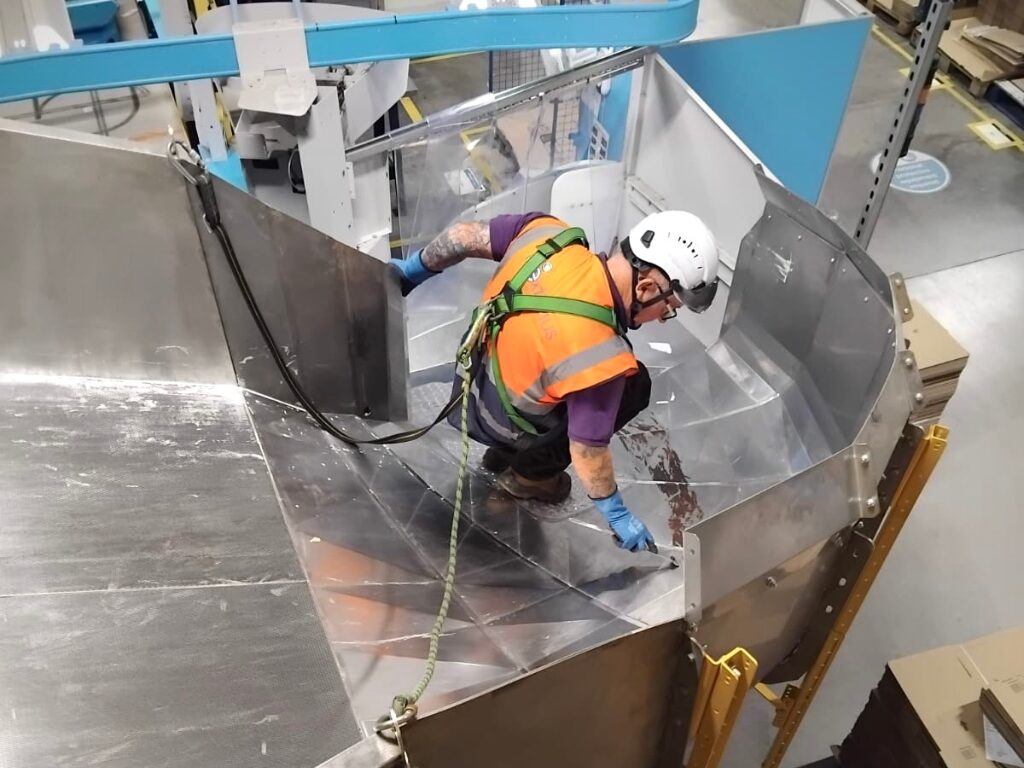
Roof beams, lighting systems, ventilation ducting and structural frameworks often sit several metres above operational areas. These surfaces gradually collect dust and debris, particularly in warehouses, logistics hubs and manufacturing facilities.
Cleaning at height requires both specialist equipment and careful planning.
High-level vacuum systems allow technicians to remove dust safely without dispersing particles into the surrounding environment or disrupting operations below.
Without the correct approach, high level cleaning can become costly, disruptive or inconsistent.
Equipment is only part of the solution
While equipment plays a critical role, expertise is equally important.
Specialist cleaning teams are trained to:
- Assess environmental and operational risks
- Select the most appropriate cleaning method
- Manage safety requirements during delivery
For example, cleaning roof structures above active warehouse floors requires careful control to prevent contamination falling into operational areas. External façade cleaning must consider water runoff, pedestrian access and surrounding infrastructure.
These factors require technical knowledge as well as experience in managing complex environments.
Safety considerations in specialist cleaning
Cleaning within commercial environments often takes place alongside ongoing operations, vehicle movement or public access.
Incorrect procedures can introduce additional risks, including:
- Slippery surfaces
- Falling debris from height
- Disruption to operational workflows
Professional cleaning teams follow structured safety protocols, including risk assessments, access control and coordination with site teams.
High level work requires technicians trained in working at height, supported by the correct equipment and compliance procedures.
The importance of planned cleaning strategies
Different areas of a site accumulate contamination at different rates.
For example:
- Car parks may require frequent cleaning due to vehicle traffic
- Warehouse structures may require scheduled high level dust removal
- External façades may need periodic specialist cleaning based on environmental exposure
A structured commercial cleaning strategy aligns cleaning frequency with risk, usage and environmental conditions.
This prevents contamination from escalating into safety hazards or material damage and reduces the need for reactive intervention.
Protecting building materials and infrastructure
Incorrect cleaning methods can shorten the lifespan of building materials.
Excessive pressure may erode surfaces. Incorrect chemicals can damage coatings. Poorly controlled cleaning can introduce moisture into structural elements.
Using specialist equipment and the correct techniques allows cleaning to be carried out precisely while protecting underlying materials.
Over time, this helps preserve both the structural integrity and appearance of commercial properties.
Supporting operational continuity
Many commercial and industrial facilities operate continuously, making disruption a key concern.
Specialist cleaning equipment is often designed to minimise operational impact. For example:
- High-level vacuum systems allow cleaning without shutting down warehouse floors
- Controlled external cleaning reduces water runoff and disruption
- Planned scheduling ensures work is carried out around operational activity
Experienced teams coordinate cleaning with site operations to maintain continuity while essential maintenance is carried out.
Why expertise matters
Cleaning complex environments requires more than standard tools.
It requires an understanding of:
- How contamination forms and spreads
- How different materials respond to cleaning methods
- How to deliver work safely within live environments
Specialist teams combine equipment, technical knowledge and operational planning to deliver consistent, controlled results.
This level of expertise is particularly important across multi-site estates where safety, compliance and consistency are critical.
How Exterius delivers specialist cleaning
Exterius provides specialist cleaning services across commercial and industrial environments using purpose-built equipment and trained technical teams. From car parks and exterior surfaces to high-level structures, each service is tailored to the specific environment.
Cleaning programmes are designed around site exposure, material type and operational needs, ensuring work is carried out safely and efficiently while protecting the long-term condition of the building.
For organisations responsible for commercial estates, the difference between general cleaning and specialist cleaning services is significant. The right approach protects both the building and the people who use it every day. Contact Exterius today to find out more about our services.
