Why Planned Cleaning Protects Your Assets & Extends The Lifecycle of a Commercial Building Exterior
Commercial buildings are designed for durability, but no exterior surface remains unchanged over time. Façades, cladding systems, paving and structural elements operate in environments where weather, pollution, biological growth and operational activity constantly influence material performance.
For facilities managers and property owners, understanding the lifecycle of exterior surfaces is critical. Maintenance decisions made early in a building’s lifespan can significantly affect long-term costs, safety exposure and asset value.
Planned exterior cleaning is not simply about maintaining appearance. It is a preventative control that protects building materials throughout their operational lifecycle.
Exterior Surfaces Begin Deteriorating Immediately
From the moment a building is completed, environmental exposure begins to influence its exterior.
Airborne pollutants settle on surfaces. Moisture accumulates in shaded areas. Organic matter collects along joints and drainage points. Vehicle movement introduces dust, rubber residue and surface abrasion.
These processes rarely cause immediate visible damage. Instead, contamination accumulates gradually. Surfaces retain moisture, biological growth develops, and pollutants begin interacting with protective finishes.
Without regular intervention, these early-stage changes evolve into deeper structural deterioration.
Phase One: Early Contamination
During the early years of a building’s life, contamination tends to remain superficial.
Pollution deposits on façades. Algae or moss may begin forming on shaded paving. Dust and organic debris collect along architectural joints and ledges.
At this stage, surfaces usually remain structurally sound. Cleaning requirements are relatively light and can be addressed through controlled exterior maintenance programmes.
Early cleaning removes contaminants before they embed into the material structure. This preserves protective coatings and prevents moisture retention.
Facilities teams who intervene during this phase typically maintain lower long-term maintenance costs.
Phase Two: Embedded Contamination
If early contamination is not addressed, pollutants begin bonding more firmly with surface materials.
Organic growth thickens. Moisture remains trapped within porous materials. Staining becomes more visible and difficult to remove. Protective coatings may begin to degrade.
At this stage, cleaning often requires more specialised equipment and techniques. Façade systems, cladding panels and paving may need targeted treatments to remove embedded contamination without damaging the material.
While restoration is still possible, intervention becomes more intensive and more expensive than preventative cleaning.
Phase Three: Surface Degradation
When contamination remains unmanaged for extended periods, material degradation begins to occur.
Moisture retention can accelerate corrosion in metal systems and weaken stone or concrete structures. Pollutants may permanently stain cladding or façade materials. Freeze–thaw cycles expand trapped moisture, causing surface cracking.
Once degradation reaches this stage, cleaning alone is no longer sufficient. Surfaces may require repair, resurfacing or full replacement.
For commercial property owners, this shift represents a move from maintenance expenditure to capital expenditure.
Planned cleaning aims to prevent surfaces from reaching this stage of deterioration.
Environmental Pressures Accelerate the Lifecycle
Commercial buildings rarely exist in static environments. Seasonal and environmental factors accelerate surface wear.
Urban pollution can rapidly stain façades. Coastal environments introduce salt exposure. Industrial estates experience higher levels of airborne particulates and operational debris.
Seasonal cycles also influence exterior performance. Autumn debris blocks drainage systems. Winter frost intensifies slip risk and moisture damage. Spring growth accelerates biological contamination.
A structured cleaning programme accounts for these pressures and adjusts intervention frequency accordingly.
Operational Risk and Liability Exposure
Exterior surfaces do more than protect the building envelope. They also influence safety across the site.
Walkways, service yards and entrance areas are exposed to constant foot traffic and vehicle movement. Contaminated surfaces can reduce traction, increasing slip hazards during wet or cold conditions.
Over time, moss, algae and organic debris accumulate along pedestrian routes and loading zones. Without structured cleaning, these areas become increasingly hazardous.
When incidents occur, maintenance records are often reviewed to determine whether reasonable preventative measures were in place.
Planned exterior cleaning supports duty of care obligations by managing contamination before it creates reportable risk.
Financial Stability Through Planned Maintenance
Reactive cleaning tends to occur after problems become visible or disruptive. This approach introduces unpredictability into facilities budgets.
Emergency cleaning often requires rapid mobilisation of specialist teams, additional access equipment and out of hours scheduling to minimise operational disruption.
Planned cleaning distributes intervention across predictable intervals. Surfaces remain manageable, labour requirements remain controlled and financial forecasting becomes more stable.
Across multi site portfolios, this stability becomes particularly valuable. Small variations in maintenance standards across locations can create disproportionate cost differences over time.
Protecting Asset Value
Commercial properties represent long term investments. Their exterior systems contribute directly to asset value and lifespan.
Façade systems, cladding, paving and drainage infrastructure are expensive to repair or replace. When these materials are protected through preventative maintenance, their operational lifespan can extend significantly.
Regular cleaning removes contaminants that accelerate wear, preserving both structural integrity and appearance.
For property owners, this approach protects the value of the asset while reducing the likelihood of premature refurbishment.
National Consistency for Multi Site Estates
For organisations operating across multiple locations, consistency of maintenance standards is essential.
Fragmented cleaning approaches can create uneven conditions across estates. Some sites remain well maintained while others accumulate contamination and risk exposure.
A nationally coordinated exterior cleaning programme introduces uniform standards and reporting across locations.
Intervention frequency is determined by exposure levels, surface materials and operational activity rather than reactive complaints or visible deterioration.
This consistency strengthens risk management while supporting predictable maintenance planning.
How Exterius Supports Exterior Asset Protection
Exterius delivers nationally coordinated commercial exterior cleaning programmes through directly employed specialist teams.
Maintenance strategies are developed around site exposure, material condition and operational requirements. High impact zones such as entrances, walkways and loading areas are prioritised within the cleaning framework.
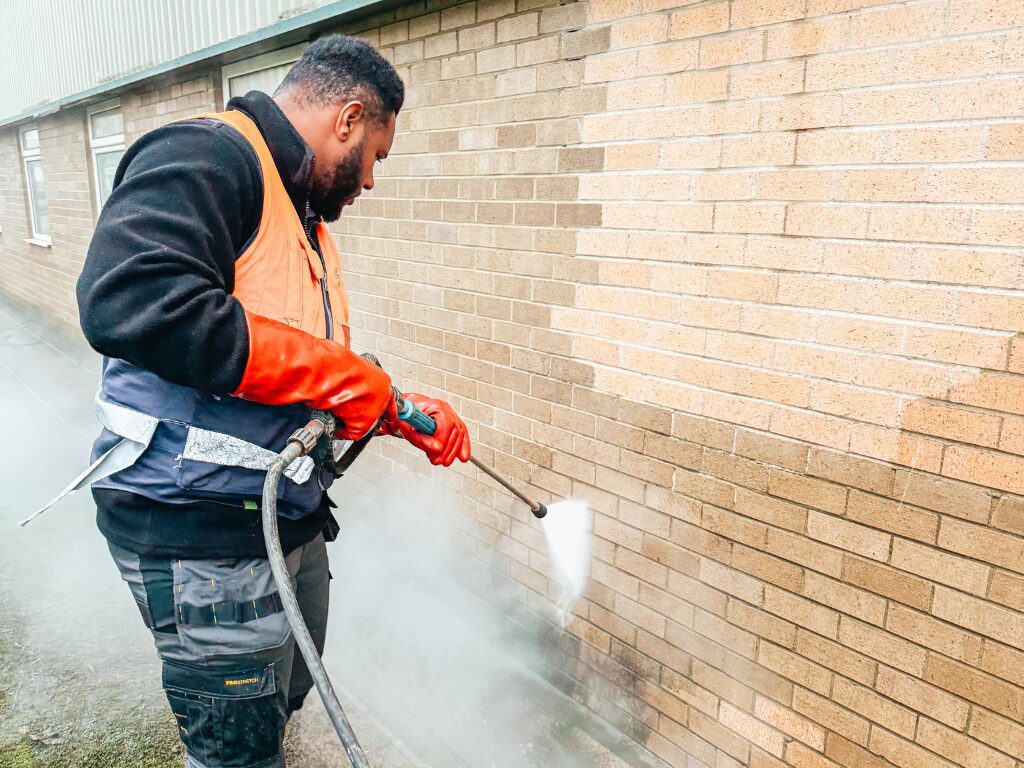
Using specialist systems such as DOFF steam cleaning and controlled pressure washing, contamination can be removed safely while preserving delicate materials.
This structured approach protects exterior surfaces throughout their lifecycle, preventing contamination from progressing into structural deterioration.
The exterior of a commercial building evolves continuously under environmental and operational pressures. Contamination accumulates gradually, but its impact becomes significant when left unmanaged.
Understanding the lifecycle of exterior surfaces highlights the importance of early and consistent intervention. Planned cleaning removes contaminants before they embed into materials, reducing long term repair costs and protecting asset value.
For organisations responsible for commercial estates, exterior cleaning should not be treated as cosmetic maintenance. It forms part of asset protection, operational safety and long term financial planning.
A structured maintenance programme ensures building exteriors remain safe, functional and resilient throughout their operational life. Contact Exterius today to find out more.
