What Your Warehouse Ceiling Says About Your High Level Cleaning Strategy
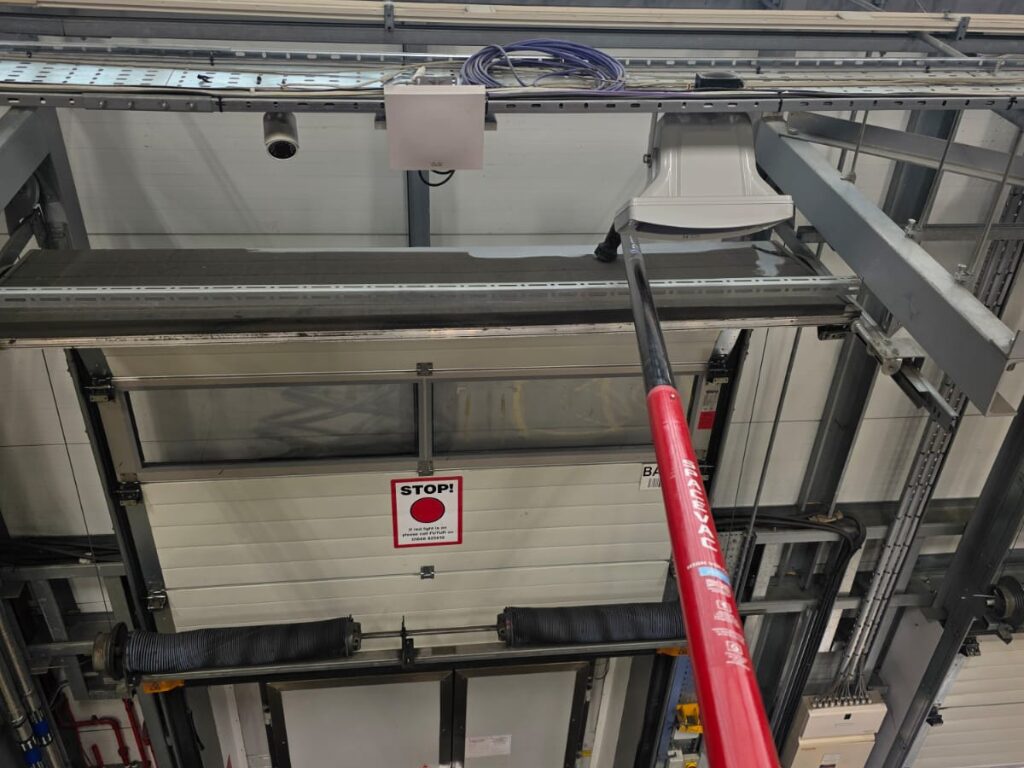
Warehouse cleaning is often judged by what happens at ground level. Floors are swept, walkways are maintained, and operational areas are kept clear.
However, effective warehouse cleaning services do not stop at what is visible.
One of the most accurate indicators of whether a cleaning strategy is proactive or reactive sits far above the warehouse floor. The ceiling.
Roof beams, lighting systems, ducting and cable trays collect dust, fibres and airborne particles over time. These high-level surfaces are rarely included in routine cleaning, yet they play a critical role in contamination control, air quality, and compliance.
Looking up can reveal whether a site is managing risk properly or allowing it to build unnoticed.
Dust does not disappear. It moves upwards
Every warehouse environment generates dust.
Packaging materials, pallet movement, vehicle traffic and general operational activity release fine particles into the air continuously. While some of this settles on floors and racking, a significant proportion rises and accumulates at height.
Ceiling beams, ventilation systems and lighting fixtures act as natural collection points. Because these surfaces are rarely disturbed, dust layers can build gradually over time without being immediately visible.
If dust is clearly visible at high level, it often indicates that cleaning efforts are focused only on accessible areas rather than the full environment.
High level dust reveals how your warehouse operates
Dust patterns at ceiling level are not random. They reflect how the building functions.
Areas above loading bays, packing zones or production lines typically show heavier accumulation due to increased activity. Ventilation systems can redistribute airborne particles across structural steelwork, while heat rising from machinery can carry fine debris upward.
These patterns provide insight into:
- Where contamination is generated
- How it spreads across the site
- Which areas require targeted intervention
A structured high level cleaning strategy takes these factors into account when planning cleaning schedules.
Why high level cleaning is often overlooked
Most warehouses maintain consistent warehouse floor cleaning because these areas are visible and directly impact daily operations.
High level areas are different.
They require specialist access equipment, trained technicians, and detailed safety planning. As a result, high level cleaning services are often delayed, reduced, or treated as secondary.
However, this is where some of the highest risks sit.
Dust accumulated at height can be disturbed by airflow, maintenance work or operational vibration. Once reintroduced into the environment, it can affect air quality, contaminate products, and contribute to safety hazards.
The operational impact of ceiling contamination
High level contamination does not stay at ceiling level.
It affects the entire facility.
Common impacts include:
- Dust falling onto stored goods or packaging
- Reduced efficiency of ventilation and extraction systems
- Poor lighting performance due to debris on fixtures
- Increased risk of combustible dust hazards in certain environments
- Ongoing recontamination of cleaned floor areas
For facilities managers, visible dust at height is often a sign that the current warehouse cleaning services are not addressing the full risk profile of the site.
What a clean ceiling actually indicates
A clean warehouse ceiling is rarely accidental.
It typically reflects a structured, planned approach to cleaning that considers the building as a complete environment.
Facilities that invest in high level cleaning services understand that contamination moves vertically as well as horizontally. Their cleaning programmes include elevated structures alongside routine floor and operational cleaning.
This approach helps to:
- Maintain better air quality
- Reduce recontamination
- Protect products and equipment
- Support compliance and audit readiness
Quick check. What does your ceiling say?
If you are unsure whether your current cleaning strategy is sufficient, a simple visual check can highlight potential gaps.
Look for:
- Visible dust on beams, lighting or ducting
- Uneven build up across different zones
- Heavy accumulation near ventilation systems
- Signs of debris falling onto racking or products
If any of these are present, it is likely that high level cleaning is not being addressed consistently.
Integrating high level cleaning into your maintenance plan
Effective warehouse cleaning strategies are built around risk, not just visibility.
A comprehensive plan will typically include:
- Routine floor cleaning and maintenance
- Dust control in high activity zones
- Scheduled high level cleaning of beams, ducting and lighting
- Inspection and maintenance of ventilation systems
- Periodic specialist cleaning based on operational demands
By addressing contamination at every level, facilities teams can reduce long term risk and maintain a more controlled environment.
Using the right equipment for high level cleaning
Cleaning elevated warehouse structures requires specialist equipment designed for safe and controlled access.
Professional vacuum systems allow dust to be removed directly from high level surfaces without dispersing particles into the air. This is particularly important in operational environments where maintaining air quality is critical.
Systems such as high reach vacuum technology enable technicians to clean beams, pipes and fixtures efficiently while minimising disruption.
Using the correct method ensures contamination is removed safely rather than redistributed across the site.
Why planned cleaning prevents escalation
Dust accumulation rarely becomes a problem overnight. It builds gradually.
When high level warehouse cleaning services are scheduled as part of a planned maintenance programme, contamination can be removed before it becomes visible or hazardous.
Reactive cleaning, by contrast, often occurs only after issues appear. At that point, the level of build up may require more extensive intervention, increased cost, and greater disruption.
A planned approach provides consistency, cost control, and reduced operational risk.
How Exterius supports high level warehouse cleaning
Exterius provides specialist warehouse cleaning services and high level cleaning solutions for industrial and logistics environments across the UK.
Using trained technicians and professional vacuum systems, high level structures including roof beams, lighting systems and ventilation components can be cleaned safely and efficiently.
Cleaning programmes are built around the operational requirements of each site, ensuring minimal disruption while maintaining compliance and safety standards.
This structured approach allows facilities teams to manage contamination proactively rather than reacting to visible build up.
A warehouse ceiling provides a clear indication of how effective a cleaning strategy really is.
Dust accumulation at height often signals that cleaning efforts are focused only on ground level. In contrast, clean high level structures reflect a proactive, risk based approach that considers the entire environment.
For warehouses and industrial facilities, the most important cleaning decisions are not always made at floor level.
They start by looking up.
If your current cleaning plan does not include high level cleaning, it may be time to reassess what your environment is telling you.
FAQs
Do warehouses need high level cleaning services?
In most cases, yes. Dust and airborne particles naturally settle above head height on beams, ducting and lighting. Without high level cleaning, this build up can impact air quality, safety and compliance.
What is high level warehouse cleaning?
High level warehouse cleaning involves removing dust and contamination from elevated structures such as roof beams, racking, ducting and lighting using specialist equipment and trained technicians.
How often should high level cleaning be carried out?
This depends on the level of activity, dust generation and operational risk within the warehouse. High throughput environments typically require more frequent cleaning.
Why is dust at height a problem?
Dust can become airborne again, contaminate products, reduce air quality, and contribute to fire risks in certain environments. It can also lead to audit and compliance issues.
What is the safest way to clean warehouse ceilings?
Specialist vacuum systems and high reach equipment allow technicians to clean safely from ground level or controlled access platforms without spreading dust into the environment.
