When Does Your Exterior Need Professional Attention?
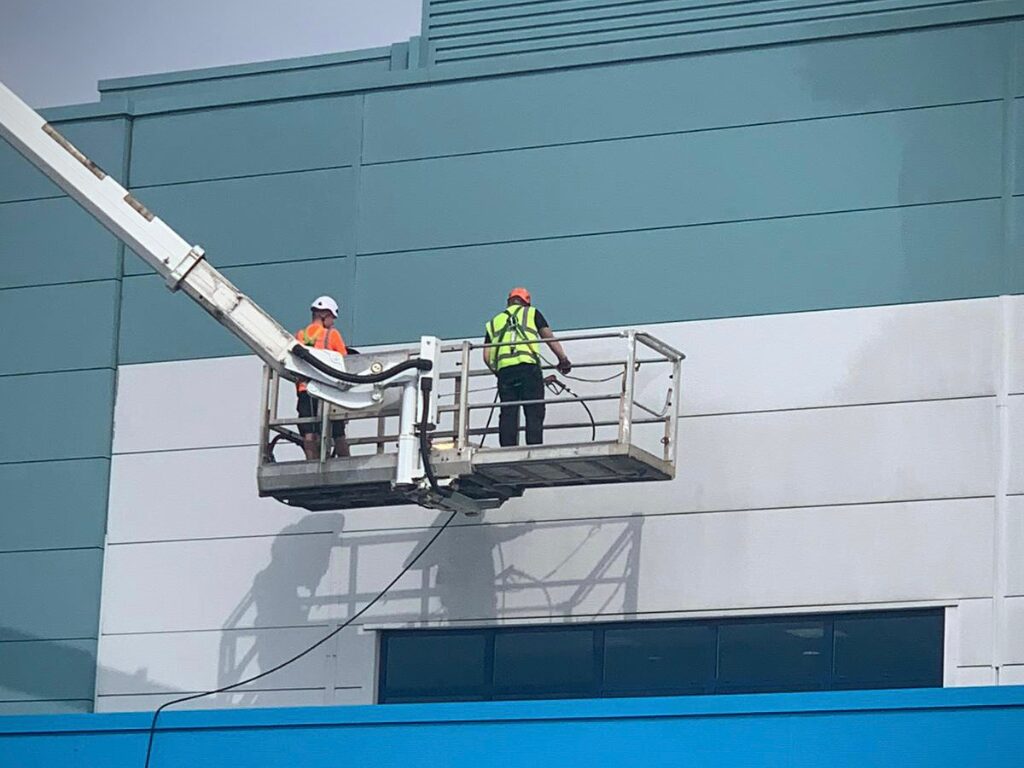
Commercial cladding is designed to protect, insulate and present a building.
It plays a major role in how a commercial property performs and how it is perceived. For offices, warehouses, factories, retail units and industrial buildings, cladding is often one of the most visible parts of the site.
However, cladding is also constantly exposed to weather, pollution, organic growth, traffic film and general environmental contamination.
Over time, this build-up can affect appearance, surface condition and long-term maintenance requirements. If it is ignored, what begins as a visual issue can become a wider facilities management concern.
For property teams and facilities managers, knowing when commercial cladding needs professional cleaning is essential.
Why Commercial Cladding Gets Dirty
Cladding is exposed to the environment every day.
Rain, wind, airborne pollution, dust, vehicle emissions, organic matter and general weathering all contribute to surface contamination. In industrial and commercial areas, this process can happen more quickly due to higher levels of traffic, machinery movement and airborne particles.
Common causes of cladding contamination include:
- pollution staining
- algae and moss growth
- rainwater marks
- traffic film
- dust and airborne residue
- bird fouling
- organic debris
- industrial contamination
- poor drainage or water run-off
This contamination rarely appears overnight. It builds gradually, which makes it easy to overlook until the building starts to look visibly tired.
Why Cladding Cleaning Is More Than Cosmetic
A clean exterior improves presentation, but cladding cleaning is not just about appearance.
Commercial cladding forms part of the building envelope. It helps protect the structure and contributes to the overall condition of the property. When contamination is left on the surface for long periods, it can hold moisture, stain materials and make future cleaning more difficult.
For facilities managers, this can create issues around:
- building presentation
- tenant satisfaction
- landlord expectations
- long-term surface condition
- maintenance records
- site safety
- brand perception
- asset value
A poorly maintained exterior can suggest that the rest of the building is not being properly managed, even when internal operations are running well.
Planned cladding cleaning helps businesses maintain a professional appearance while supporting long-term property maintenance.
The Signs Your Cladding Needs Cleaning
Commercial cladding does not always need cleaning at the first sign of dirt, but there are clear warning signs that professional attention may be required.
These include:
- visible staining or discolouration
- green or black organic growth
- water marks or streaking
- dull or faded exterior panels
- dirty areas around vents or drainage points
- pollution staining near roads or car parks
- bird fouling or biological contamination
- uneven appearance across elevations
- complaints from tenants, visitors or stakeholders
If contamination is visible from ground level, it may already be more established than it appears.
Early intervention usually makes cleaning simpler and helps avoid more intensive restoration work later.
Why Location Affects Cladding Condition
Not every commercial building will need cladding cleaning at the same frequency.
Location has a major influence on how quickly contamination develops. Buildings near busy roads, industrial estates, logistics parks, car parks or high-footfall areas are more likely to accumulate dirt and pollution.
Weather exposure also matters.
North-facing elevations, shaded areas and surfaces exposed to regular moisture are more likely to develop algae or organic growth. Buildings in urban areas may experience heavier staining from airborne pollution and vehicle emissions.
For multi-site businesses, this means cladding cleaning schedules should not be identical across every location.
A warehouse in Birmingham, a commercial unit in Nottingham, a business park property in Milton Keynes and an office building in Leeds may all require different cleaning frequencies depending on exposure, surface type and site usage.
The Risks of Leaving Cladding Uncleaned
Delaying cladding cleaning can make the problem more difficult to resolve.
Contamination can become embedded into the surface, particularly where staining has been left for a long period. Organic growth may retain moisture, which can affect the condition of the surface and surrounding materials.
Over time, neglected cladding can lead to:
- more intensive cleaning requirements
- higher maintenance costs
- surface staining
- reduced kerb appeal
- tenant or landlord concerns
- negative first impressions
- potential deterioration of exterior finishes
Reactive cleaning is often more disruptive because the issue has already progressed.
Planned cladding cleaning helps prevent this by removing contamination before it becomes harder to treat.
Choosing the Right Cleaning Method
Cladding should never be cleaned with a one-size-fits-all approach.
The right method depends on the type of cladding, the surface condition, the level of contamination, the height of the building and the access requirements.
Using the wrong cleaning method can cause damage, force water into vulnerable areas or fail to remove staining properly.
A specialist cleaning provider should assess:
- cladding material
- surface condition
- type of contamination
- height and access requirements
- nearby pedestrian or vehicle movement
- water control and drainage
- building use
- safety requirements
- environmental considerations
Some surfaces may require controlled pressure washing. Others may need soft washing, specialist detergents, manual cleaning or more sensitive methods.
The aim is to remove contamination effectively while protecting the building fabric.
Cladding Cleaning and Health and Safety
Exterior cleaning also has a health and safety dimension.
Cleaning commercial cladding often involves work at height, access equipment, live site conditions and coordination around staff, visitors or vehicles. This means planning is essential.
A professional cladding cleaning project should include:
- site survey
- RAMS documentation
- safe access planning
- trained operatives
- appropriate equipment
- controlled working zones
- communication with site teams
- before and after reporting
For facilities managers, this documentation matters. It supports internal records, insurance requirements and wider health and safety processes.
Cladding cleaning should never feel improvised. It should be structured, controlled and evidence-led.
Cladding Cleaning for Industrial and Warehouse Sites
Industrial and manufacturing buildings often have large areas of external cladding.
These sites are exposed to vehicle movement, airborne dust, exhaust emissions, loading bay activity and weather. As a result, cladding can become dirty quickly, particularly around entrances, service yards, delivery areas and high-traffic elevations.
For warehouse and logistics operators, cladding cleaning supports:
- site presentation
- landlord compliance
- tenant standards
- client visits
- surface maintenance
- long-term asset protection
It can also be combined with other specialist cleaning services, such as warehouse floor cleaning, loading bay cleaning, high-level internal cleaning and external hard standing cleaning.
This creates a more complete maintenance approach across the full site.
Cladding Cleaning for Offices, Retail and Public-Facing Buildings
For offices, retail units, hospitality venues and public-facing buildings, exterior appearance has a direct impact on perception.
Visitors often judge a site before they enter. Dirty cladding, stained glazing, marked entrances or algae growth around external areas can create a poor first impression.
Regular exterior cleaning helps maintain a professional image and supports the overall quality of the environment.
For managed properties, this can also support tenant satisfaction and help landlords demonstrate that common areas and external surfaces are being maintained properly.
How Often Should Commercial Cladding Be Cleaned?
There is no single answer.
The right cleaning frequency depends on the building location, surface material, exposure, footfall, pollution levels and business requirements.
As a general guide, commercial cladding should be inspected regularly and cleaned before contamination becomes embedded. High-exposure sites may need cleaning more frequently than low-traffic or sheltered buildings.
A planned maintenance schedule may include:
- annual cladding inspections
- scheduled exterior cleaning
- seasonal cleaning around entrances and walkways
- more frequent cleaning for high-traffic elevations
- additional cleaning after major weather events or construction activity
For facilities managers, the key is to move away from waiting until the building looks neglected.
Planned cleaning gives more control over cost, timing and building condition.
Why Planned Cladding Cleaning Saves Money Long Term
Reactive cleaning often costs more because the issue has been left to develop.
When contamination becomes embedded, more time, labour and specialist treatment may be required. Access equipment may be needed for longer periods. Cleaning may also need to be scheduled urgently to satisfy landlords, tenants, insurers or internal stakeholders.
Planned cladding cleaning helps avoid this.
It keeps contamination manageable, supports predictable budgeting and reduces the likelihood of expensive restorative cleaning later.
For businesses responsible for large sites or multiple buildings, this can make a significant difference to annual maintenance planning.
How Exterius Supports Commercial Cladding Cleaning
Exterius provides specialist cladding cleaning and exterior building cleaning for commercial and industrial sites across the UK.
Our work is designed for businesses that need safe, professional and well-documented exterior maintenance.
We support facilities managers, property teams and operations managers with:
- commercial cladding cleaning
- exterior building cleaning
- DOFF steam cleaning
- soft washing where appropriate
- controlled pressure washing
- commercial window cleaning
- jet washing and open space cleaning
- loading bay and hard standing cleaning
- planned exterior maintenance contracts
Every project is planned around the building, surface condition, access requirements and site activity. RAMS documentation, trained operatives and suitable equipment are used to ensure work is completed safely and effectively.
As an EcoVadis Gold-rated specialist cleaning company, Exterius supports organisations looking for responsible, structured and professional cleaning support.
Conclusion
Commercial cladding is one of the most visible parts of a building, but it is often overlooked until contamination becomes obvious.
Weather, pollution, organic growth, vehicle movement and general environmental exposure all affect exterior surfaces over time. If cladding is not maintained, the impact can extend beyond appearance and contribute to higher cleaning costs, surface deterioration and poor site presentation.
Professional cladding cleaning helps protect the building, maintain first impressions and support long-term asset management.
For facilities managers and property teams, the best approach is planned, not reactive.
Contact Exterius to discuss commercial cladding cleaning and exterior building maintenance for your site.
FAQs
How often should commercial cladding be cleaned?
This depends on the building location, surface type, exposure and level of contamination. Many commercial buildings benefit from annual inspection and planned cleaning before dirt or organic growth becomes embedded.
What causes cladding to become stained?
Common causes include pollution, rainwater run-off, algae, moss, traffic film, dust, bird fouling and general environmental contamination.
Can pressure washing damage cladding?
Yes, if the wrong pressure or method is used. Cladding should be assessed before cleaning so the correct technique can be chosen for the surface.
Is cladding cleaning suitable for warehouses and industrial buildings?
Yes. Warehouses and industrial buildings often have large areas of external cladding that require planned maintenance to protect appearance and surface condition.
Does cladding cleaning help with building presentation?
Yes. Clean cladding improves first impressions and helps commercial buildings look better maintained for staff, visitors, tenants and clients.
Can cladding cleaning be included in a planned maintenance contract?
Yes. Exterius can include cladding cleaning within a planned exterior maintenance programme alongside window cleaning, jet washing, loading bay cleaning and other specialist services.
Does Exterius provide cladding cleaning across the UK?
Yes. Exterius provides commercial cladding cleaning and exterior building cleaning for businesses across the UK.
