Anti-Slip Flooring in Cold Storage and Chiller Units
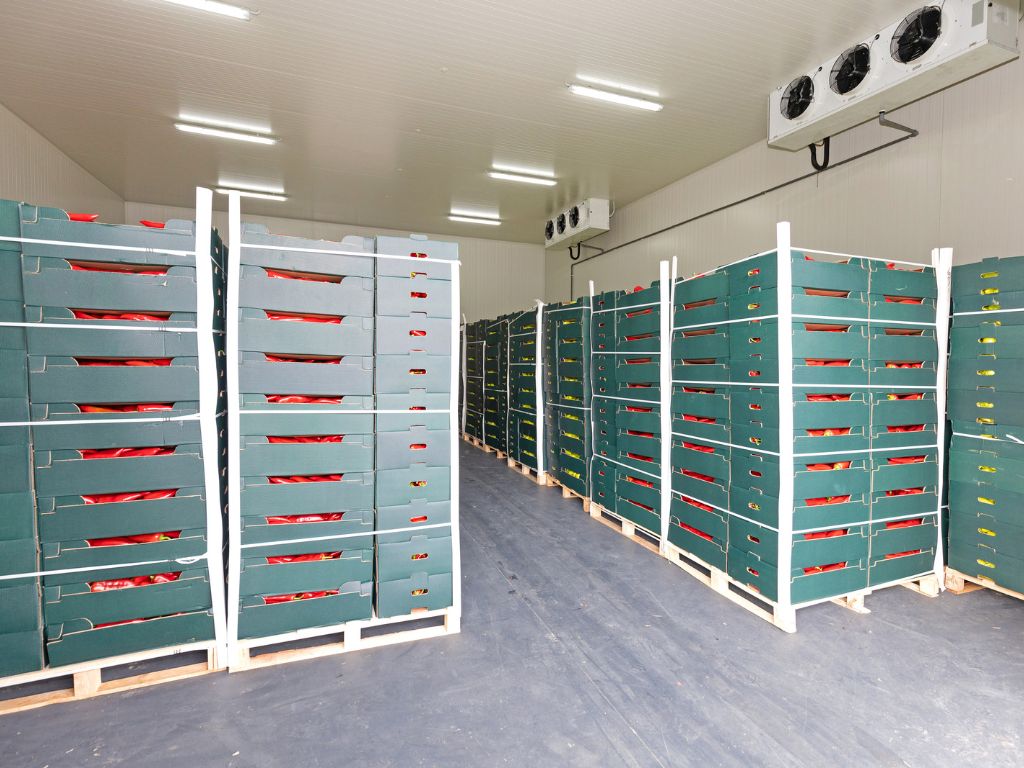
Cold storage and chiller units are one of the highest slip-risk areas in many commercial and industrial buildings.
The risk also gets worse in winter.
Condensation, temperature changes between ambient and chilled zones, and frost build-up around access points can all reduce floor grip in areas where staff are moving quickly, carrying stock or operating equipment.
Most winter safety planning focuses on car parks, yards and building entrances.
Cold storage floors are often missed because they sit indoors and out of the weather. But that does not mean they are low risk.
For facilities managers, cold stores and chiller units should be treated as part of the wider slip risk assessment, especially where floors regularly become wet, cold or contaminated.
Why cold storage floors behave differently
Unlike an external walkway or warehouse entrance, the main risk in a chiller or cold store often comes from condensation.
When warmer, moisture-heavy air meets a cold surface, water can form directly on the floor. This is especially common around door thresholds, transition areas, loading points and entrances between ambient and chilled spaces.
In winter, this effect can become more noticeable.
Larger temperature differences between outside air, loading bays and chiller interiors can increase condensation. Frost or ice may also form near external doors, refrigerated vehicle docking points or areas exposed to repeated temperature changes.
The result is a floor that may look clean but still behave like a wet-process area.
That is why standard indoor flooring assumptions do not always apply to cold storage environments.
The areas most likely to become slippery
Slip risk in cold storage environments is rarely spread evenly across the whole floor.
It usually concentrates around the areas where temperature, moisture and movement overlap.
The highest-risk areas often include:
- chiller and freezer entrances
- door thresholds
- walk-in fridge floors
- loading bay access points
- cold store transition zones
- refrigerated vehicle docking areas
- food preparation and holding areas
- stock movement routes
- areas cleaned through washdown processes
These are the points where staff are most likely to move between surfaces, carry stock, push trolleys or work quickly during busy periods.
If the floor becomes slippery when wet or cold, warning signs alone are unlikely to be a strong long-term control measure.
What PTV rating should cold storage floors achieve?
PTV stands for Pendulum Test Value.
It is used to measure the slip resistance of a floor surface and helps facilities teams understand how much grip the floor provides under specific conditions.
PTV 36 is widely used as the recognised benchmark for low slip potential on level pedestrian surfaces when tested in the relevant end-use condition.
The condition part matters.
A cold store floor should not only be considered when dry. If the floor is regularly exposed to condensation, moisture, frost, washdown or contamination, testing and treatment decisions need to reflect that reality.
For consistently wet, cold or condensation-prone areas, many sites may choose to work to a higher wet PTV target, often around 45 or above, depending on the risk assessment, floor type and how the area is used.
The important point is that slip resistance should be measured and managed, not assumed.
Why cleaning alone may not solve the problem
Cleaning is essential in cold storage and food environments.
It controls hygiene, removes residue and supports operational standards. But cleaning does not always solve the underlying slip issue.
Many cold storage floors are smooth, sealed, tiled or resin-based because they need to be hygienic and easy to clean. That can make them more vulnerable to reduced grip when wet, frosted or contaminated.
