Why Winter Is the Best Time for a Warehouse Deep Clean
Winter is a practical window for a warehouse deep clean because it places more pressure on internal environments while reducing the opportunity for weather-dependent exterior work. For warehouse and distribution centre operators, timing a deep clean around this seasonal shift can help keep the site running safely and efficiently through the busiest stock-handling months.
Rather than reacting once dust, debris or hygiene issues become visible, a planned winter deep clean gives facilities teams more control.
It helps reset the site before contamination becomes harder to manage.
Why timing a warehouse deep clean matters
A warehouse deep clean is not just a hygiene task.
It is an operational one.
Dust and debris build-up can affect racking inspections, air quality, stock handling, floor safety, automated systems and general site standards.
Getting the timing right means the clean happens when it causes the least disruption and delivers the most value.
For many warehouses, winter is the point where internal conditions start to change. Doors may be opened less frequently, ventilation may be reduced to retain heat, and wet weather brings more dirt and moisture into loading bays and goods-in areas.
At the same time, facilities teams often have fewer opportunities to complete exterior cleaning, façade work or weather-dependent maintenance.
This makes winter a useful time to prioritise internal specialist cleaning.
Winter creates different warehouse cleaning problems
Warehouse contamination does not stop in winter.
It changes.
Rain, salt, grit and mud are tracked into loading bays, pedestrian routes and forklift areas. Reduced ventilation can allow dust and airborne particles to settle more heavily. Stock movement and goods-in activity may increase around seasonal peaks.
The result is a building that can appear operationally normal while contamination builds in areas routine cleaning does not fully reach.
This is particularly important around:
- high-level beams and racking
- ductwork and roof-level structures
- loading bays and goods-in areas
- warehouse floors and walkways
- areas under and around racking
- automated systems, conveyors or sortation equipment
- food-grade or hygiene-controlled storage zones
A planned deep clean targets these areas before they create audit, safety or operational problems.
High-level dust is easy to miss
One of the biggest reasons to plan a warehouse deep clean is high-level dust.
Dust, fibres, packaging debris and airborne particles naturally collect above head height. They settle on beams, racking, lighting, ducting, internal cladding and roof-level fixtures.
Because these areas are not part of routine floor cleaning, they can go unnoticed for long periods.
This matters for compliance and site management.
Dust build-up can affect air quality, fire risk management, machinery performance, lighting efficiency and visual inspections. It can also fall or move through the warehouse as air circulation changes.
A winter deep clean gives facilities teams the chance to address this hidden build-up while reviewing the wider condition of the site.
Deep cleaning supports inspections
Racking and structural inspections are harder when surfaces are covered in dust and debris.
Build-up can obscure damage, corrosion, wear or small defects that might otherwise be picked up during a visual check.
Cleaning before inspections makes those checks more effective.
It also shows that the site is being actively maintained, rather than only cleaned when something becomes visibly unacceptable.
For warehouses with client visits, audits, insurance reviews or internal compliance checks, this documentation can be valuable.
What a warehouse deep clean usually includes
A specialist warehouse deep clean goes beyond daily housekeeping.
The exact scope depends on the site, but it may include:
- high-level cleaning of beams, racking, ductwork and overhead structures
- floor cleaning and debris removal
- loading bay and goods-in area cleaning
- racking and structural cleaning
- cleaning under and around storage areas
- washdown or specialist cleaning for food-grade and hygiene-controlled spaces
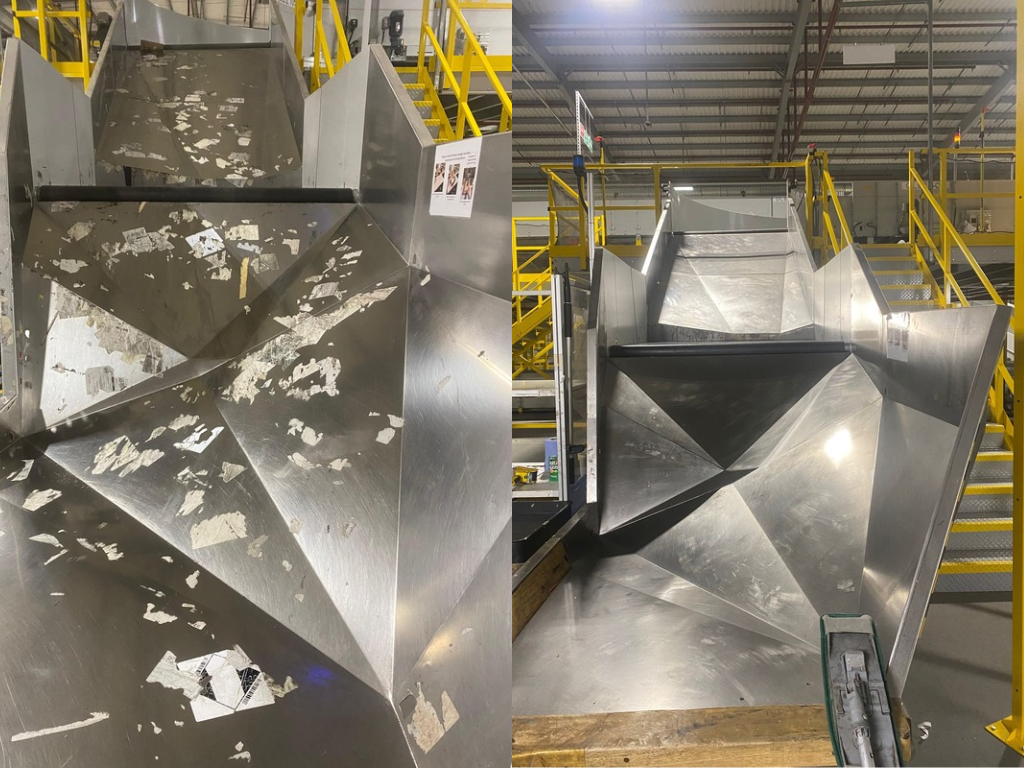
For automated or sorter-based warehouses, the scope may also include careful cleaning around conveyors, chutes, sensors and machinery-adjacent areas.
The aim is to clean the areas routine cleaning cannot reach, without disrupting live operations unnecessarily.
Why planned cleaning is better than reactive cleaning
Reactive deep cleaning usually happens after a problem has already been identified.
An audit flags dust. A racking inspection is difficult. A loading bay becomes heavily contaminated. A client visit highlights poor standards. A hygiene issue appears.
At that point, cleaning becomes urgent and harder to schedule.
A planned winter deep clean allows the work to be phased around shifts, access windows or quieter operational periods. It also helps facilities managers document what has been cleaned and when.
That record can support audits, inspections, insurance discussions and internal health and safety reporting.
How Exterius can help
Exterius provides specialist warehouse deep cleaning for distribution centres, logistics operators, manufacturing sites, food storage facilities and industrial environments across the UK.
Our teams support with high-level cleaning, warehouse floor cleaning, racking and beam cleaning, loading bay cleaning, internal cladding cleaning and planned maintenance programmes.
Winter creates pressure on warehouse environments, but it also creates an opportunity.
By dealing with dust, debris and contamination before they become operational issues, facilities teams can keep sites safer, cleaner and easier to manage.
If your warehouse needs a planned deep clean this winter, Exterius can help assess the site and build the right cleaning programme.
FAQs
When is the best time of year for a warehouse deep clean?
Winter can be a practical time for a warehouse deep clean because internal cleaning is less affected by weather than exterior work, and many sites need stronger control over dust, debris, wet-weather contamination and seasonal stock movement.
Why does warehouse dust increase in winter?
Dust can become more noticeable in winter because doors and vents may be opened less frequently to retain heat. Reduced ventilation can allow airborne particles, fibres and debris to settle more heavily inside the warehouse.
Does a warehouse need to close for a deep clean?
Not usually. Specialist warehouse cleaning can often be scheduled in phases, out of hours or around operational zones so the site can continue functioning where safe and practical.
How does a deep clean support racking safety inspections?
Dust and debris can obscure damage, corrosion or wear on racking and structural elements. Cleaning these areas before inspection can make visual checks more effective.
How often should a warehouse have a specialist deep clean?
This depends on activity levels, dust levels, sector requirements and site risk. Many warehouses benefit from at least an annual deep clean, with higher-use or hygiene-controlled environments requiring more frequent specialist cleaning.
