Why Facilities Shouldn’t Overlook Internal High-Level Cleaning
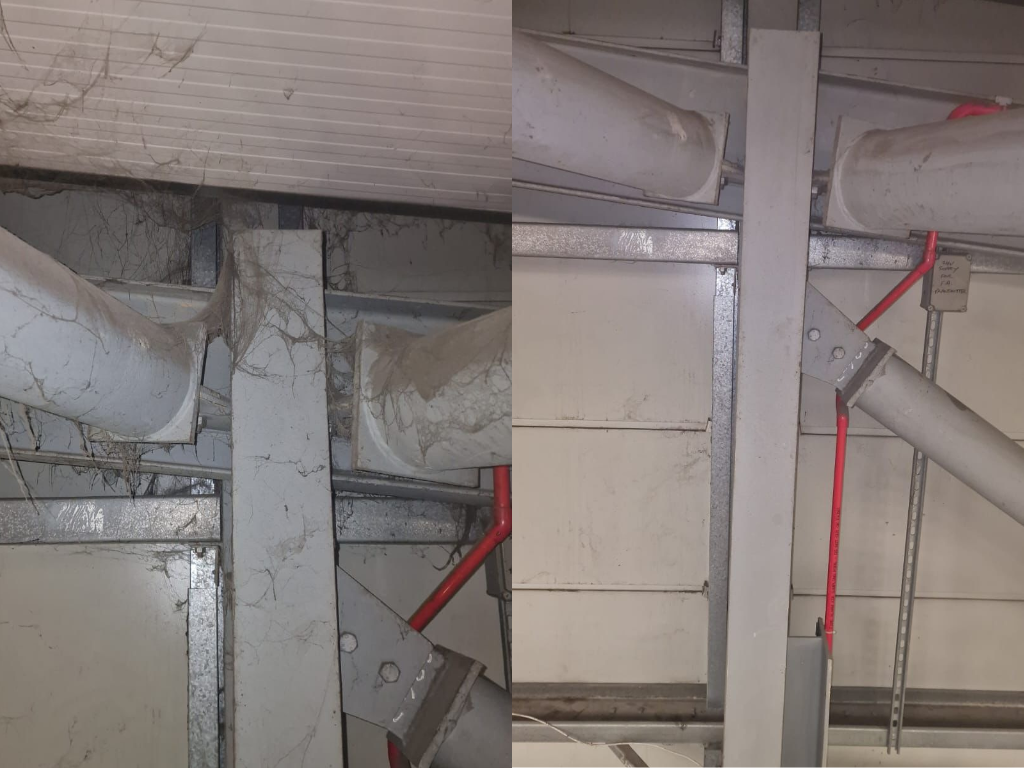
Internal high-level cleaning covers the areas above normal reach inside a building.
Beams, ductwork, light fittings, racking, pipework, sprinkler heads and roof-level structures all collect dust and debris over time.
Because these areas sit above eye level, they are easy to miss. Routine cleaning rarely reaches them, and the build-up often remains hidden until it begins to affect inspections, hygiene standards, air quality or fire safety reviews.
For facilities managers, internal high-level cleaning should not be treated as an occasional extra.
It is part of maintaining a safe, compliant and properly controlled building.
What counts as internal high-level cleaning?
Internal high-level cleaning usually covers any internal surface or structure above normal cleaning reach.
This can include overhead beams, structural steelwork, ductwork, pipework, ventilation systems, high-level racking, light fittings, sprinkler heads, signage, roof void areas and ceiling-level fixtures.
These areas are common in warehouses, factories, production facilities, logistics sites, retail units, leisure environments and large commercial buildings.
The issue is simple.
If it sits above routine cleaning height, it is probably collecting dust, fibres, cobwebs or airborne contamination.
And because it is not cleaned daily or weekly, that build-up can continue for months or years.
Why internal high-level cleaning matters
High-level dust is not just an appearance issue.
In industrial and commercial environments, overhead dust and debris can affect site safety, hygiene standards and inspection outcomes.
Dust on beams and racking can obscure damage, corrosion or wear during visual inspections. Build-up around sprinkler heads, detectors, lighting and ventilation systems can also raise concerns during fire safety or facilities reviews.
In food production, healthcare and pharmaceutical environments, overhead dust creates an additional hygiene risk because contamination above the working area can fall into the space below.
Even in offices, retail and hospitality environments, visible cobwebs or dust on high-level fittings can undermine the presentation of an otherwise clean building.
The areas people do not look at every day are often the areas that create the biggest problems when they are finally inspected.
Internal vs external high-level cleaning
Internal and external high-level cleaning are often planned separately.
External high-level cleaning usually covers building façades, cladding, gutters, signage, glazing and external structures. It is often weather-dependent and needs to be scheduled around dry conditions, safe access and daylight.
Internal high-level cleaning is different.
It is not usually affected by the weather, which makes it easier to schedule throughout the year. For many facilities teams, winter can be a practical time to carry it out because exterior cleaning work naturally slows down.
The problem is that internal areas do not always provide the same visible prompt.
A dirty façade is obvious from outside. Dust on roof beams or ducting can go unnoticed until an audit, inspection or maintenance issue brings it to light.
How often should internal high-level cleaning be scheduled?
There is no single frequency that applies to every building.
The right schedule depends on the environment, the level of dust, the type of activity on site and the standards the business needs to meet.
Warehouses and industrial units often need internal high-level cleaning annually, or more frequently in dusty or high-traffic environments.
Food production and processing facilities may need cleaning aligned with hygiene audit cycles.
Healthcare and pharmaceutical environments will usually be guided by stricter hygiene and infection control requirements.
Offices, retail and hospitality sites may need less frequent cleaning, but it should still be included in the wider facilities maintenance plan.
The important point is that the schedule should be planned, not left until visible dust or audit pressure forces action.
Can it be done without disrupting operations?
In many cases, yes.
Internal high-level cleaning can often be scheduled out of hours, in phased areas or around operational activity. The right approach depends on access, site layout, working height and the type of environment.
Specialist access equipment may be needed, and work should be supported by RAMS, trained operatives and clear communication with the site team.
For facilities managers, the planning is just as important as the clean itself.
A structured approach means the work can be completed safely while reducing disruption to staff, customers, production or warehouse activity.
Why it belongs in the facilities plan
Internal high-level cleaning is easy to postpone because the affected areas are not always visible.
But that is exactly why it needs to be planned.
Once dust and debris have built up, the clean becomes more intensive, inspections become harder and compliance records become weaker.
Including internal high-level cleaning in the facilities schedule helps maintain better control over the building. It supports health and safety, fire safety, hygiene, air quality and presentation.
Exterius provides internal high-level cleaning for commercial, industrial, warehouse, retail and public-facing environments across the UK.
If high-level dust has not been reviewed recently, Exterius can help assess the site and plan a safe, practical cleaning programme.
FAQs
What is included in internal high-level cleaning?
Internal high-level cleaning can include beams, structural steelwork, ductwork, pipework, ventilation areas, high-level racking, light fittings, sprinkler heads, signage, roof voids and ceiling-level fixtures.
Is internal high-level cleaning weather-dependent?
No. Unlike external façade or cladding cleaning, internal high-level cleaning can usually be scheduled year-round because it takes place inside the building.
How does internal high-level cleaning support compliance?
It removes dust and debris that can affect inspections, hygiene standards, fire safety reviews, air quality and general health and safety management.
How often should a warehouse have internal high-level cleaning?
Annual cleaning is a common baseline for warehouses and industrial environments, but dusty, high-traffic or hygiene-controlled sites may need it more frequently.
Can internal high-level cleaning be done around live operations?
In many cases, yes. Work can often be phased, carried out out of hours or scheduled around operational areas, depending on access and safety requirements.
