Warehouse Floors to Plant and Machinery: Why Industrial Cleaning Matters
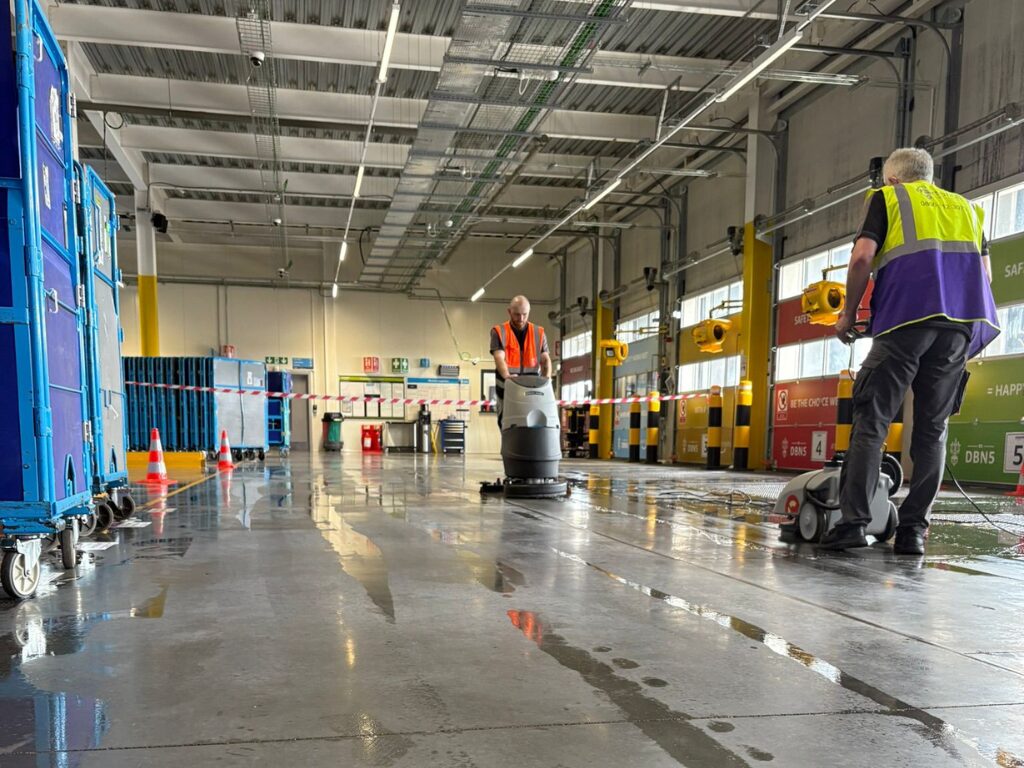
Industrial environments operate under conditions very different from offices or retail spaces. Warehouses, manufacturing plants and distribution centres generate dust, debris, oils and residues as part of normal operations.
Over time, these contaminants accumulate across floors, structural elements, plant equipment and machinery.
Industrial cleaning is designed to manage these environments safely and effectively. It focuses on maintaining operational efficiency, protecting infrastructure and reducing workplace risk.
Understanding how industrial cleaning services work helps businesses ensure their facilities remain safe, compliant and productive.
What industrial cleaning actually involves
Industrial cleaning refers to specialist cleaning processes used in operational environments such as factories, warehouses, production facilities and logistics hubs.
Unlike general cleaning, industrial cleaning addresses contaminants generated through industrial activity. These may include:
- Dust and fine particulates from manufacturing processes
- Oil and grease from machinery or vehicle movement
- Packaging debris and pallet fragments
- Chemical residues or industrial waste
- Heavy contamination on floors, walls or equipment
Managing these contaminants requires specialist equipment, trained technicians and cleaning methods designed specifically for industrial environments.
Warehouse floor cleaning
Warehouse floors experience constant traffic from forklifts, pallet trucks and operational staff. Over time, dust, debris, tyre marks and oil residues accumulate across these surfaces.
If left unmanaged, contamination can:
- Increase slip risk
- Reduce visibility of floor markings
- Interfere with safe vehicle movement
Industrial floor cleaning typically involves mechanical scrubber dryers, specialist degreasers and high-capacity sweeping systems designed to remove contamination efficiently across large areas.
This allows cleaning to take place with minimal disruption to operations.
Cleaning around plant and machinery
Machinery and production equipment are central to industrial operations, but they also generate contamination.
Dust and residue can collect around moving parts, vents and electrical components. Oil leaks and lubricant residue may accumulate beneath equipment or along production lines.
Cleaning around plant and machinery requires careful planning.
Equipment must be protected while contamination is removed safely. Specialist cleaning teams often work alongside maintenance teams to ensure cleaning is carried out without interfering with mechanical systems or electrical components.
Maintaining clean equipment areas can also improve performance by reducing overheating and preventing debris from entering sensitive parts.
High level cleaning in industrial facilities
Many industrial environments contain elevated structures such as roof beams, lighting systems, ventilation ducting and cable trays.
Dust and airborne particles gradually settle on these surfaces, particularly in warehouses handling packaging materials, textiles or wood products.
If unmanaged, high-level dust can:
- Become airborne during operations
- Affect air quality
- Contribute to safety risks in certain environments
As part of a structured industrial cleaning programme, high level cleaning is carried out using specialist vacuum systems and access equipment. This allows dust to be removed safely without spreading contamination into operational areas.
Managing industrial dust and debris
Dust management is a core component of effective industrial cleaning.
Operational processes frequently generate fine particles that settle across floors, equipment and structural areas. If left unmanaged, these particles can interfere with machinery performance and create safety hazards.
Structured cleaning programmes manage dust through:
- Mechanical sweeping and floor cleaning
- Vacuum extraction systems
- Scheduled high level cleaning
This prevents contamination from reaching levels that impact safety, compliance or performance.
Cleaning external industrial areas
Industrial cleaning is not limited to indoor environments.
External areas such as loading bays, service yards and car parks are also exposed to contamination from vehicle movement and environmental factors.
Common issues include:
- Oil residues and tyre marks
- Debris accumulation
- Organic growth and surface contamination
- Blocked drainage channels
Exterior industrial cleaning may involve pressure washing, surface cleaning equipment and drainage clearance to maintain safe and functional external areas.
Maintaining these spaces supports both operational safety and overall site presentation.
Why industrial cleaning requires specialist equipment
Industrial environments involve heavy contamination and large surface areas that standard cleaning equipment cannot manage effectively.
Specialist equipment used in industrial cleaning services may include:
- Industrial vacuum systems for dust extraction
- Mechanical floor scrubbers for large warehouse areas
- High-pressure cleaning systems for external surfaces
- Access equipment for high level cleaning
Using the correct equipment ensures contamination is removed efficiently while protecting building materials and operational infrastructure.
The importance of trained cleaning teams
Industrial cleaning requires technicians who understand the environments they are working in.
Cleaning teams must consider:
- Machinery safety and operational constraints
- Site-specific risks and hazards
- Access requirements and restrictions
- Working around live operational environments
For example, cleaning around active production equipment requires coordination with site teams to ensure work can be carried out safely.
High level cleaning also requires technicians trained in working at height and using specialist access systems.
Professional training ensures cleaning is delivered safely while maintaining operational continuity.
Planned industrial cleaning programmes
The most effective industrial cleaning strategies are not reactive. They are planned and structured.
A well-designed cleaning programme identifies areas of highest risk and schedules cleaning accordingly.
This may include:
- Routine floor cleaning for daily maintenance
- Periodic deep cleaning around plant and machinery
- Scheduled high level dust removal
- External cleaning for safety and presentation
This approach prevents contamination from escalating into safety hazards, compliance issues or operational disruption.
How Exterius supports industrial cleaning
Exterius provides specialist industrial cleaning services for warehouses, factories and commercial facilities across the UK.
Services include:
- Warehouse floor cleaning
- High level dust removal
- Plant and machinery cleaning
- External surface and yard cleaning
Cleaning programmes are designed around the operational requirements of each site, ensuring work is completed safely while minimising disruption.
By combining specialist equipment with trained technicians, Exterius helps organisations maintain safe, compliant and efficient industrial environments.
Industrial cleaning plays a critical role in maintaining safe and productive operational facilities.
From warehouse floors to plant equipment and structural elements, contamination accumulates naturally as part of industrial activity. Managing this build up requires specialist equipment, trained teams and structured maintenance programmes.
When delivered effectively, industrial cleaning services protect infrastructure, reduce safety risks and support long-term operational efficiency.
For businesses operating warehouses and industrial facilities, industrial cleaning is not simply routine maintenance. It is a core part of safe and effective site management. Contact Exterius today for a site survey.
